
The Paris arrondissements – the secret to finding your perfect Paris property…
When you live in Paris, life revolves around your arrondissement, the title given to the districts of the city.
Emma Skoble and Kathryn Brown of Metropolitan Properties Paris, France property specialists with more than 50 years of experience between them, say, “if you’re thinking of moving to Paris you need to know your escargot – not the traditional French dish with lashings of butter and garlic, but the snail-like lay out of Paris’s twenty districts, known as arrondissements”.
The Paris arrondissements – a series of villages
Whether you plan to live in, or have a vacation property in Paris, understanding the arrondissements, defined districts, is essential. Arrondissement number 1 is in the centre, that’s where you’ll find some of the biggest landmarks, the Louvre Museum and the Arc de Triomphe. Then the arrondissements spiral out in a loop until they reach the 20th – a former working-class district and one of the greenest spaces of Paris, which in parts has a very villagey feel.

Each arrondissement has its own distinct character, Paris is like a series of villages in a way, and says Emma, “sometimes people get it in their heads that only a certain arrondissement will do, and sometimes they’re right, but not always. It can surprise buyers that the preconceived ideas they have about a district are sometimes wrong, and the best way to really know a place in Paris is to experience it, check out where the metro stations are, people watch at the local café, wander the streets, the squares and parks, and take a look at the restaurants and shops – that way you’ll really know which arrondissement is best for you.
Ask the Paris experts “Where would you live?”
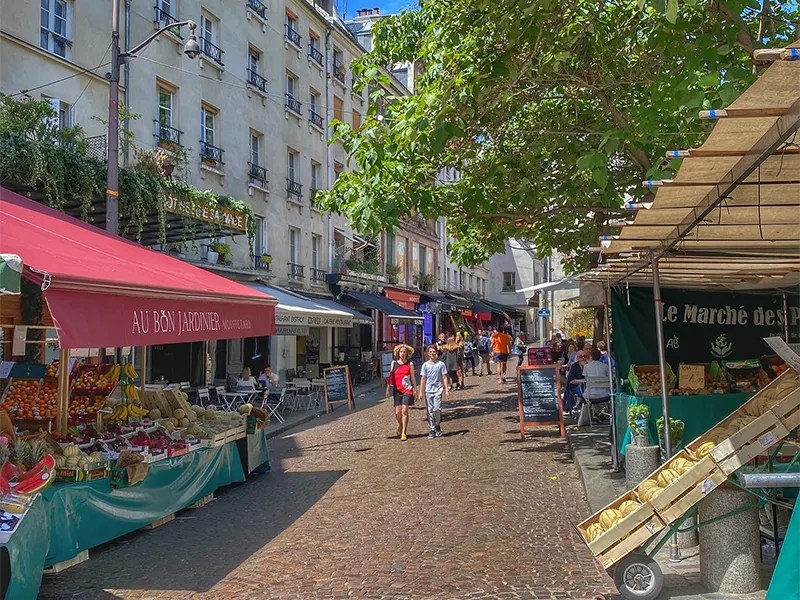
From apartments in the 7th, where you’ll find the Eiffel Tower, excellent metro connections, local boulangeries and a lovely street market in rue Cler, to mansions in the neighboring 16th with its wide leafy avenues, there’s a huge variety of property in Paris and each arrondissement is different to another. And it very much depends on your purpose for buying – permanent home, holiday home, investment?
Says Kathryn “I’m often asked which arrondissement I’d live in, and though all have their own attractions, for me it would be the 12th, between Marché d’Aligre and Bastille, a village-like neighborhood but with excellent amenities. Gare de Lyon from where trains head south, Bercy from where trains head to Burgundy and beyond. Within walking distance of the Cathedral of Notre Dame, and it neighbors the Marais district.
I love the Promenade Plantée, once a railway line that’s been transformed into an above ground planted walkway (which inspired the Highline Park in Manhattan) which winds for 4.5km through Paris from the Opera Bastille to the Bois de Vincennes. The 12th offers charm, a low price point, with growth potential, and a hip and trendy vibe. Stroll rue du Cotte, rue d’Aligre and the Place d’Aligre which has both indoor and outdoor markets daily (except Mondays).
You can find charming places that still sell wine and olive oil from a barrel that you can put in your own containers and take home, and shops with vintage signage painted directly on the front of the building, selling seeds and spices and all sorts.

“I also love the Upper Marais (3rd arr.) in the area around rue Bretagne. The labyrinth of medieval streets makes for a charming stroll and window shopping in unique little stores. Prices are lower than in the 4th, and not overrun with tourists. All the charm, none of the hassles. The Marché Enfants Rouge, at around 400 years old is the oldest market in Paris, and named for a former orphanage on the site where orphans wore distinctive red-colored clothes so they could be identified. Nearby streets have wonderful food shops selling distinctive chocolates, caviar, baked goods, cheeses, and more.
“The area around Avenue Mozart and rue Passy in the 16th is fabulous. Close to many great international schools, both streets are filled with charming shops, cafés, and beautiful stone Haussmannian buildings. Quiet tree lined streets and access to park spaces make this a lovely area to live in.”

Emma, who lives in the 16th agrees. “Some people dismiss it as being too far from the centre but it’s actually not at all – it’s opposite the 7th on the other side of the river, and the metro connections are excellent. It’s also very residential, French families and long-term expats buy in this area for the numerous good schools, pleasant parks, and pretty streets though it’s lesser known by foreign buyers generally.
The 16th is divided into neighborhoods still referred to as ‘villages’, like ‘Le village d’Auteuil’ and ‘Le village de Passy’ which is where I live. These two areas weren’t integrated into Paris until 1860, and they’ve retained their villagey vibes with a main street, markets and churches. Benjamin Franklin lived near Passy when he was ambassador to France and enjoyed walking down to Auteuil.
Passy is the most central neighborhood in the 16th. It has a lovely covered market where you can sit and enjoy a glass of wine and oysters, or galettes and cider, after buying your vegetables, cheeses and meat. It’s a great place to live.”
Everyone has their own idea of what works best for them – a classic Haussmannian style apartment in an area of art galleries, a cobblestoned street with a mews style house, a loft studio with a roof terrace and views of the Eiffel Tower, within walking distance of a park so that you can take a bracing jog at the start of the day and unwind in the evening.

Once you’ve found ‘your’ arrondissement, then the process of finding a property starts. Multi-listings agencies aren’t a thing. “In France, each agency lists the properties that are being sold through them, but they won’t show anything from other realtors, because there’s no system in place to share fees and commission” explains Emma.
“Having a different approach is fine, but when you’re the buyer it becomes truly laborious, as you have to search all the agency websites individually to know what’s really available. And in Paris it’s even more complicated. Properties can be sold without ever being publicly advertised, it’s often about who you know, and being in the right place. We’re based in Paris because it’s the only way to be able to keep on top of what’s coming to market so that we can help our clients to find the perfect property in Paris for them.”
If you’re dreaming of your ideal property in Paris and want to know which is the right arrondissement for you, the Metropolitan Paris Property Team can help. Their local knowledge is forged from many years in the property market in Paris finding the perfect match for buyers and sellers. You can download their arrondissement guide and contact them at: metropolitanpropertiesparis.com


