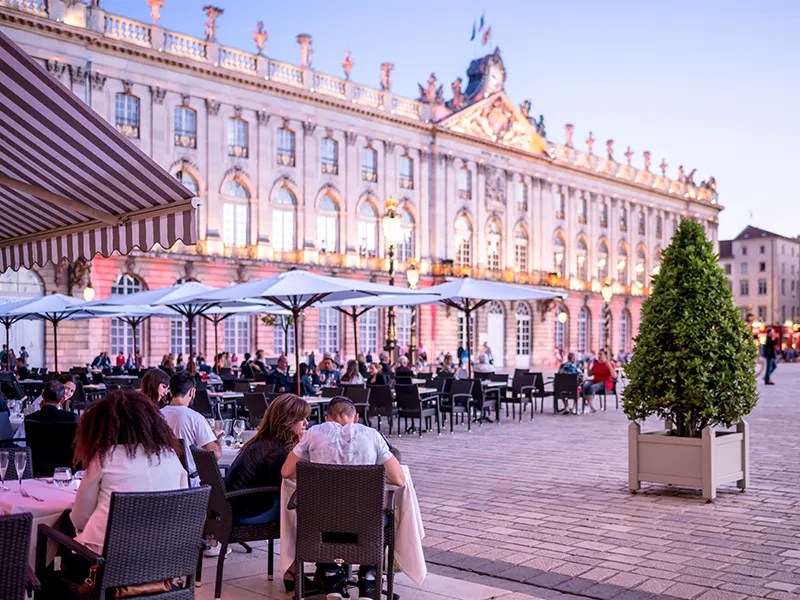
Enjoy a taste of history in Nancy Lorraine – feast-worthy restaurants, superb specialities and brilliant bars alongside dazzling architecture. One of the best ways to visit a city is through its gastronomy, and in Nancy you’re in for a truly tasty treat, says Janine Marsh.
A weekend in Nancy could be spent happily wandering and ogling the wealth of architectural jewels that pepper its streets and squares – from medieval buildings to the mini-Versailles-like Place Stanislas, the golden heart of the city, and the dazzling Art Nouveau district, one of the greatest of its style in Europe – or visiting the many exquisite museums. Nancy is a heritage hotspot, that’s for sure.
But the city is brimming with surprises—especially when it comes to its culinary credentials. Discovering the food specialities of Nancy is quite possibly the very best way to enjoy its charms. Hop on a train in Paris and alight just an hour and a half later in the centre of Nancy. Immerse yourself in the rich culture and feast-worthy regional gastronomy, where you can literally taste the past.
Nancy – a culinary capital with oodles of charm

Take in Nancy in a nutshell at the UNESCO-listed Place Stanislas. This magnificent square is the soul of the city, created by ex-King Stanislas I of Poland who, after being deposed in 1736, was granted the Provinces of Lorraine and Bar for life by his son-in-law, King Louis XV. Enter the square via grand gilded gates and be wowed by the gold-leafed facades and statues – it’s estimated that around a kilogram of gold embellishes this place.
Louis XV also awarded Duke Stanislas, as he became, an allowance of 2 million livres a year – a phenomenal sum of money in those days. As Stanislas was 60 years old, Louis and his advisors reckoned it would only be for a few years. Wrong. Stanislas lived to the ripe old age of 88 and used the money to create schools, paid his staff well and rebuilt parts of the city, partly to connect the Old Town, the medieval part, to the New Town – built in the 16th and 17th centuries, and partly to honour the King who had offered him a home. He dreamed that Louis would visit him, riding in a carriage along the long sweeping boulevards, past the dazzling buildings built in the style of Versailles. Finally, his eyes would alight on a statue of himself in the centre of Place Royale as it was then called. Alas, it never happened; Louis never visited, possibly put off by how much money his generous gesture had cost him.

Sitting at Le Grand Café Foy on the corner of Place Stanislas, you can’t help thinking that the old Duke would certainly recognise the place if he saw it today. Much is unchanged, though the statue in the centre is no longer of Louis but of Stanislas. The first stone of this square was laid in a corner building in March 1752 by Grand Duke Ossolinski, and the inauguration of the square, took place on November 21, 1755. The building became Le Grand Café Foy in 1850, named for one of Napoleon’s most brilliant Generals, Maximilien-Sebastien Foy.
With a pretty interior decorated in classic 19th century style, and large terrace offering dreamy views over the square (which was voted the favourite Monument of the French in 2021), it’s great for lunch, dinner (classic and local dishes), aperitifs, and afternoon tea.
The must eats in Nancy
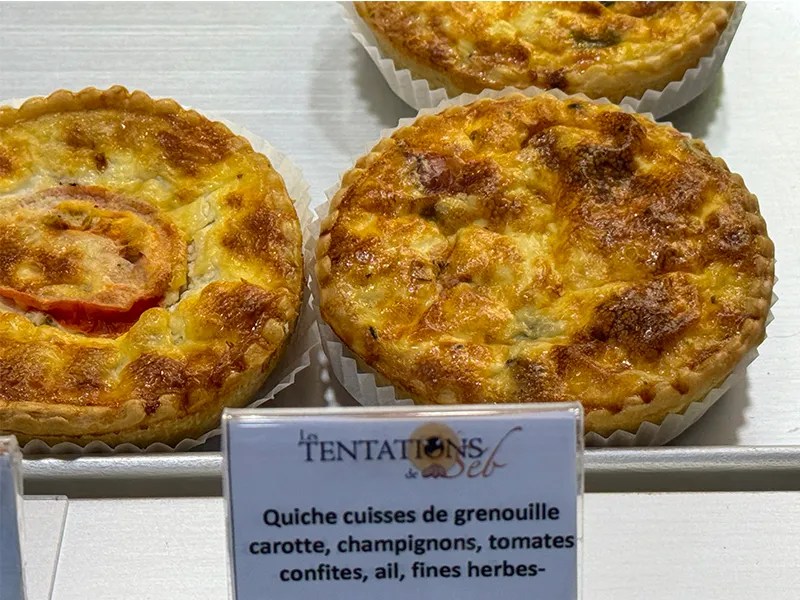
You can’t go to Nancy and not eat Quiche Lorraine! It was allegedly “invented” here some 400 years ago (though no one knows the real origins), and unlike in the recipes most of us know – a proper quiche Lorraine filling has only eggs, bacon and crème fraiche – no cheese!
Another must-eat in the city is perfect for the sweet-toothed. Legend has it that Duke Stanislas himself is responsible for the boozy baba that is now world famous. Yes, Rum Baba, that’s you. Finding the local cake too dry, the Duke asked for it to be soaked with Hungarian Tokay (AKA Tokaji) wine from Hungary. A bit later in Paris, Louis XV’s former pâtissier, Nicolas Stohrer, replaced the wine with rum, which was cheaper – and a legend was born.
For a unique treat head to the restaurant A la Table du Bon Roi Stanislas (7 rue Gustave Simon), where the chef creates a Baba with Tokay using a recipe from 18th century cookery book Le Canameliste.
Meanwhile, just a minute’s walk from Place Stanislas, you’ll find the Maison des Soeurs Macarons, an institution in the city. During the French Revolution, two Sisters, thrown out of their convent, found new jobs baking and selling macarons. When one of the Sisters left a plate of macaron mix on a windowsill, it went flat, but she did not want to waste it, so she cooked it anyway. The resulting macarons were somewhat skinny and crackled on top (we’re not talking Ladurée here), but they were so utterly scrumptious that customers flocked to buy them. The shop still uses the same secret, original recipe to this day. Sold by the dozen, on a typical weekday they produce 4,200 macarons – and during busy periods (Christmas, Easter in particular) around 10,200 macarons – the locals really do love them!
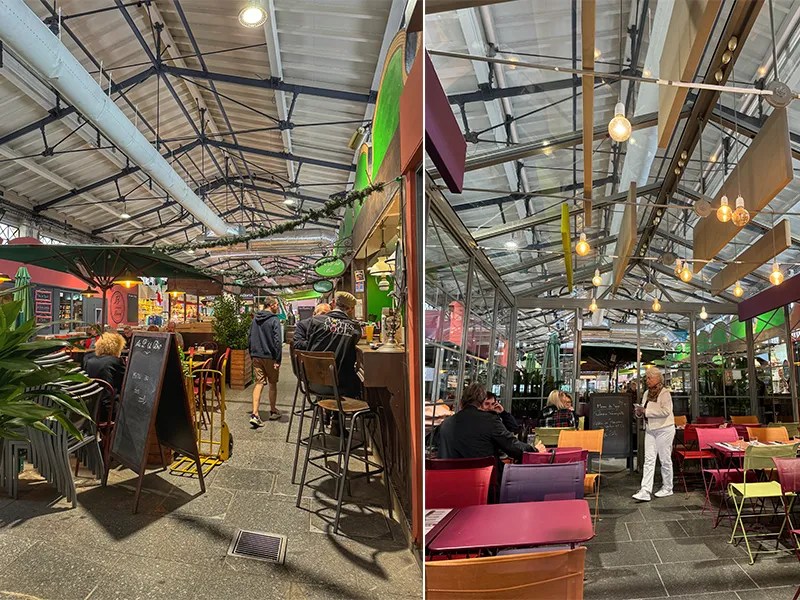
There are plenty of gourmet food shops in the city to indulge your foodie vibes, but whatever you do, don’t miss the fabulous covered market: Marché Central. There’s been a market here for 400 years, though the current building dates to 1852. You’ll find local and seasonal produce galore, from Meuse truffles to Paté de Lorraine (marinated meat baked in puff pastry), as well as locally made whisky and Mirabelle plums in all manner of things, from tarts to gingerbread and the local liqueur.

And for all things confectionary, pop into Maison Lefèvre-Lemoine and enjoy a Willy Wonka moment. Founded in 1840, their range of chocolate and sugar sweets will make even the most ardent bonbon fan flip out – from Lorraine Chardons, chocolates filled with eau de vie (first created in the 1800s), to the local Bergamotte sweets (yes, spelled with two t’s!), a popular breath freshener and digestif taken after lunch in the time of Duke Stanislas, the traditional colour is gold in honour of gilded Place Stanislas. It’s the only confectionery product in France to have been awarded the IGP (Protected Geographical Indication) label. And the only one immortalised in the film Amélie Poulain in which a Bergamotte tin filled with childhood treasures features in the plot!
Where to eat out
It’s hard to know where to start – there are so many amazing restaurants!
Breakfast like a queen: Opposite Le Grand Café Foy is the Grand Hotel de la Reine, named after Queen Marie-Antoinette, who stopped here on her way to marry Louis XVI on 9 May 1770. It is currently closed for renovations, but when it reopens (2026), this is the place to go for breakfast with stunning views over the square.
Lunch at: Restaurant I’Impromptu in the covered market. Run by Maitre Restaurateur de France Carol Bussy-Gérardin, it offers a warm welcome and utterly delicious local dishes in a vibrant atmosphere.
Fancy a picnic? Pick up some goodies from the market and head to one of the many lovely parks – Parc La Pépinière is gorgeous. Or hire a bike and enjoy one of three cycle routes that take you from city to country, including a section along the Mosel Canal, which is part of route V52 (from Paris to Prague).

Dinner at: The Brasserie Excelsior is an Art Nouveau jewel, with a classic menu, elegant décor and a painted ceiling worthy of a chapel. Don’t miss a Crêpe Suzette here – it’s a theatrical performance and a mouth-watering treat.
Push the boat out: La Maison dans le Parc, a Michelin-starred restaurant, serves elegant dishes that look like works of art and taste divine.
Where to enjoy aperitifs in Nancy
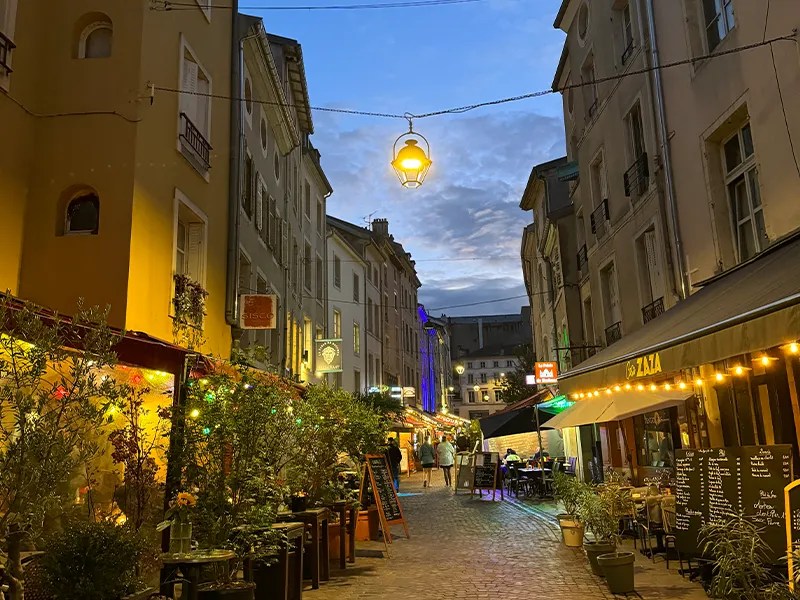
Sitting sipping the locals’ favourite, kir Mirabelle (plum liqueur and wine), in the rue des Maréchaux – literally the road of the horseshoes but known to locals as rue gourmande, just a minute’s walk from Place Stanislas, is one of life’s great pleasures. Glance up, and you’ll notice a plaque on the wall of a building that informs that the father of Victor Hugo was born here November 15, 1773.
Place Stanislas is always great for aperitifs – Le Bar XV bar in the former Governor’s Palace on Place de la Carrière is popular with locals for its super cocktails, nibbles and iconic location. Or head to Place Saint-Epvre, the old town’s main square, which is less expensive than Place Stanislas and has a great atmosphere with several excellent terraced cafés and bars. For luscious cocktails and city views, head to the Plus Crystal Hotel’s rooftop or winter garden bars.
Nancy has a great vibe, with a long list of must-sees, do’s and eats that make it a knockout destination for visitors and yet it remains almost unknown outside of France and, frankly, not that well known even to its own countrymen. It’s a city full of fascinating surprises and secrets, with a rich if rather nouveau history – no pun intended – at least by French standards, having been founded ‘only’ 1000 years ago. If you love history, heritage, culture, and gastronomy, Nancy will satisfy your soul and your appetite.
Tip: Nip to the very helpful tourist office in Place Stanislas, where you’ll be able to buy some of the local food specialities and also pick up a City Pass, which includes a guide tour, use of public transport, entry to museums, entry to the swimming pool at Nancy thermal spa, and discounts in numerous shops and restaurants.
How to get there: Nancy is just one and a half hours by train from Paris, and the station is in the centre of town.
What to see and do in Nancy – Art Nouveau heaven, marvellous museums and a fabulous spa with natural thermal springs.
Find out more at nancy-tourisme.fr/en/
Janine Marsh is the author of several internationally best-selling books about France. Her latest book How to be French – a celebration of the French lifestyle and art de vivre, is out now – a look at the French way of life. Find all books on her website janinemarsh.com
Want more France?
Discover more fabulous destinations in France with our free magazine The Good Life France
Love France? Have a listen to our podcast – everything you want to know about France and more!
All rights reserved. This article may not be published, broadcast, rewritten (including translated) or redistributed without written permission.


