
Discover the loveliest gardens of Paris. They’re perfect for pausing, picnicking and people-watching and with more than 421 municipal parks and gardens covering more than 3000 hectares – there’s plenty of choice.
Public gardens
In the city’s botanical garden, the Jardin des Plantes near the Gare d’Austerlitz, you can wander the pathways to see plants grouped according to species. In spring, it’s especially lovely when the cherry trees are in full blossom. You could make a longer visit by visiting one of the garden’s paying attractions such as the zoo or the Natural History Museum.

Nearby, there’s the prospect of a riverside stroll through the city’s outdoor sculpture park, the Jardin Tino Rossi, whose entrance is just by the left-bank end of the Pont de Sully bridge. The mix of modern sculptures and riverside views is enticing and in the evenings there’s often a salsa dancing group in full swing and you can join in if you like!

The Luxembourg Garden, a favourite with Parisians, was commissioned by Queen Marie de Medici in 1612, the gardens are split into French and English styles and cover 25 hectares of land. In the middle of this beautiful park, you’ll find a large pond with the wooden boats. There are also 106 statues spread throughout the park and the most beautiful fountain in Paris, where statues depict a tragic love story from Greek mythology – Polyphemus about to murder his love rival and win back the nymph Galatea.
The Tuileries gardens between the Louvre and the Champs Elysées. It’s one of the biggest outdoor museums in France. Run by the Louvre it contains artworks from the 17th to 20th century.
The Palais Royal gardens are, just around the corner from the famous Comédie Française theatre. Louis XIV spent much of his childhood here. A tiny canon he played with can still be seen in one of the flowerbeds. During the French Revolution, this site was tactfully renamed the ‘Equality Palace’ (the palace was burned down in 1871) and ‘Revolution Garden’.
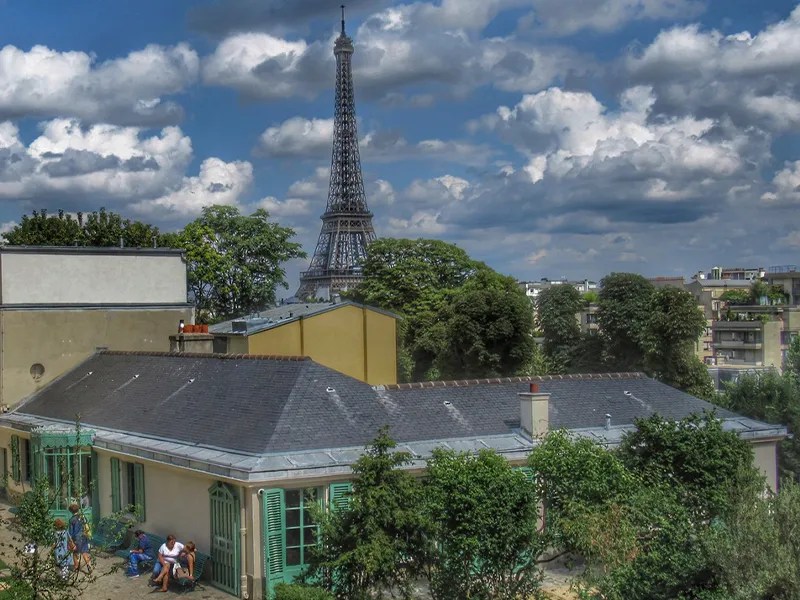
Many of the city’s free museums have beautiful gardens. In the Marais district, there are plenty of benches on both sides of the lovely lawns leading up to the National Archives Museum and if you turn right at the top you’ll find a secluded little shady garden which most people don’t know about! In the gardens of Balzac’s House in the 16th arrondissement, you can pause to enjoy views of the Eiffel Tower, to read a little Balzac or recall that the author used to escape via the garden when debtors came to call at his house!
And don’t miss the inner garden of the Petit Palais museum, a haven of peace and tranquillity, with a cute café.
Garden Squares
Baron Haussmann, who redesigned much of Paris in the 19th century, aimed to create a garden square in each of the city’s 80 quartiers. If you study the map of the area you’re visiting, you’ll almost certainly find at least one, usually with the word Square (not place, the French word for square) in its name. They vary in size and atmosphere, but you’ll always find a peaceful little spot to sit and relax.
The Squares often have something specific to the local area. In Square Samuel Paty, near the Sorbonne in the 5th arrondissement, you’ll find a statue of the philosopher Montaigne. His foot has been rubbed shiny by the generations of students who touch it for luck on their way to exams. Square René Viviani, next to Shakespeare and Company, is home to the oldest tree in Paris, a black locust (Robinia pseudoacacia) planted by a royal gardener in 1602, plus there are stunning views of the Seine and Notre Dame.
Idyllic gardens
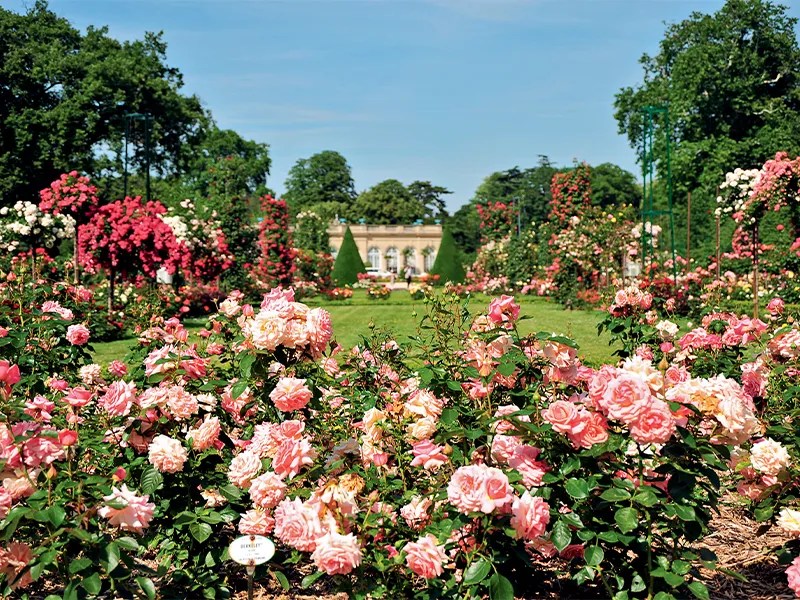
One spot which really stands out is the gorgeous rose garden at the Parc de Bagatelle in the Bois de Boulogne. For a small entrance fee, you can admire 10,000 roses and learn which of the 1200 species Parisians voted as their favourite this year. You can also explore the wider grounds, where peacocks roam free, or visit the Château de Bagatelle (Sundays only).
Combine nature and top-class art in the garden of the Rodin Museum, where some of the sculptor’s most famous works are on display, including The Thinker. The garden of the Grand Mosque of Paris, the oldest mosque in mainland France, is another haven of tranquillity in the 5th arrondissement. The courtyard garden has an idyllic mix of plants, marble pillars and fountains, all set against a backdrop of mosaic walls and archways.
Gardens with a history

The secret garden at the Museum of Montmartre, once home to artist August Renoir , was the location of his famous The Swing painting, and it’s here he painted Bal du Moulin de la Galette. The garden overlooks a secret, an ancient vineyard, right in the heart of Paris!
The Chapelle Expiatoire in the 8th arrondissement is very moving. The chapel and garden stand in memory of Louis XVI and Queen Marie Antoinette whose bodies were flung into a mass grave on this site after their execution. Inside the chapel are beautiful statues of both, and the surrounding garden, simply planted in greenery and white flowers, is very peaceful.
The medieval garden at the Musée de Cluny, highlighting plants grown in the Middle Ages, offers another tranquil spot, despite being just yards from the bustling Boulevard Saint-Michel.
Louis XIV’s landscape artist, André le Nôtre, has left us many textbook examples of 17th century French classical garden design, including at Versailles, Chantilly and Fontainebleau. Less often visited, but no less stunning, are the gardens of the château at Saint-Germain-en-Laye, just across the road from the station you’ll reach after a short RER trip from central Paris. The formal gardens, free to enter, with their symmetrical pathways and lawns, give way to a large forest you can explore.

The gardens are also a highlight of the Château de Malmaison, about 40 minutes outside Paris. The château was the private country retreat of Napoleon and Josephine and she lived there after their divorce. Her interest in gardening was so well-known that explorers brought her exotic plants from their travels. As you enjoy ‘her’ garden, you can reflect that when Napoleon hurried back to Paris on hearing news of her death, it was here that he came to remember her. “I still seem to see her’ he wrote, ‘walking along the paths and collecting the flowers that she loved so much’.
Marian Jones is a former teacher of French now travel writer with a podcast – City Breaks, bringing listeners and readers the background history and culture which will inform their travels in l’Hexagone. citybreakspodcast.co.uk
Want more France?
Discover more fabulous destinations in France with our free magazine The Good Life France
Love France? Have a listen to our podcast – everything you want to know about France and more!
All rights reserved. This article may not be published, broadcast, rewritten (including translated) or redistributed without written permission.


