
The Winter months are a great time to visit Vaucluse in the heart of Provence. It’s the perfect season to chill, eat, drink and be merry says Janine Marsh…
Most of us think of Provence as a Summer sunshine destination, never-ending fields of lavender, sun-kissed hilltop villages and vibrant street markets. Spring and Autumn are also a popular time for tourists. But for me, Winter is the best time to visit. For a start it’s uncrowded, you’ll largely have it to yourself along with the locals. It’s tranquil, blissful, and the scenery is gorgeous. It’s not a huge department so, just brimming with things to do, you can experience a lot without too much travelling. Plus, Provence is mouth-wateringly delicious at this time of the year – it’s truffle season after all. And if you go from mid-November to the end of December – Provence puts on its festive finery, whilst from January to March, there’s plenty to do including festivals, concerts and cultural events. So head to Vaucluse and discover a Provencal winter wonderland…
Winter flavours – eat, drink and be merry
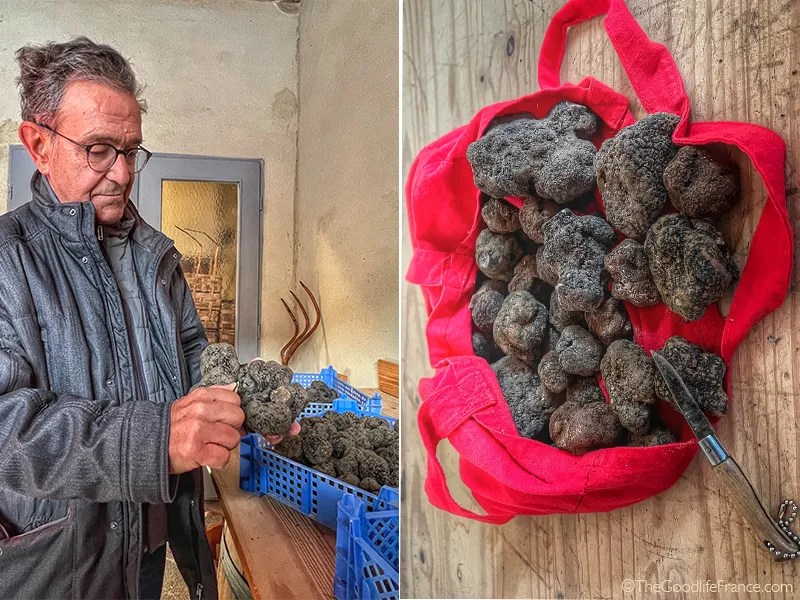
The cooler months are perfect to enjoy the flavours of Provence from daube, a wine-steeped beef stew to sauteed wild mushrooms and vegetable soup flavoured with herbs preserved from the summer months. Not to mention delicious desserts including oreilletes, wafer thin, orange flower flavoured, deep fried cakes, nougat and crystallised fruit. But nothing says Provence in Winter quite like truffles.
Vaucluse is the top producer of black truffles in France. There are truffle hubs in Carpentras, Ménerbes and the historic town of Richerenches where this year the Truffle Harvest Proclamation – which marks the official opening of the truffle season – takes place on 2nd December. The Truffle market of medieval Richerenches has been held for 100 years. It takes place each Saturday morning from November to March. And in January there’s a Truffle Mass in the 12th century church, dedicated to the Black Diamond, in which local truffle producers place a very good truffle in the collection tray as an offering.
If you think this all sounds rather truffle-icious – you’re not wrong. On a rather breezy Saturday morning with the Mistral wind accompanying me along Richerenche’s appropriately named Cours du Mistral, I ogled stalls piled with truffles, truffle flavoured oils, cheeses, mustards and vinegars alongside exquisite Provencal specialties. Generations of truffle growers come here every year and the market attracts visitors from all over the world. It’s not easy to describe the earthy aroma that assails your nostrils – like being at the bottom of a big hole in a forest that’s been covered for a hundred years, but in a good way! And if you’re tempted to take home a truffle, you can expect to pay from €300-1300 per kilo (though a single truffle is a lot less – from €12 at the market) depending on quality.
After warming up with a bowl of truffle flavoured eggs (of course) at the cosy and delicious L’Escaspade restaurant I headed off to Valréas (8km from Richereches), to go find my own buried treasure with truffle grower Christian Merin and his friendly snuffling, truffle-hunting dogs Prune and Prisca. Prisca dashed from tree to tree sniffing and sometimes digging before dropping a truffle at Christian’s feet – at least most of the time, at one point she couldn’t resist a nibble and gulped down a small one! www.pepiniere-christian-merin.com
If you want to store your truffles in olive oil, then pop to nearby Puyméras where the Vieux Moulin Farnoux is the last mill left in Vaucluse still using traditional production methods. Take a tour and tasting of the mill and it will become immediately clear why chefs clamour for the pure, simple cold-pressed ‘liquid gold’ produced here.
It’s thirsty work eating all this delicious food so next I recommend you head to Gigondas for a visit to the cellars of Pierre Amadieu and of course a tasting of robust reds, crisp whites and soft rosés. This lovely town was founded as a recreational site for the soldiers of the Roman Empire’s Second Legion, and legend has it that it was they who first planted the vines here.
One of the best brunches in France!
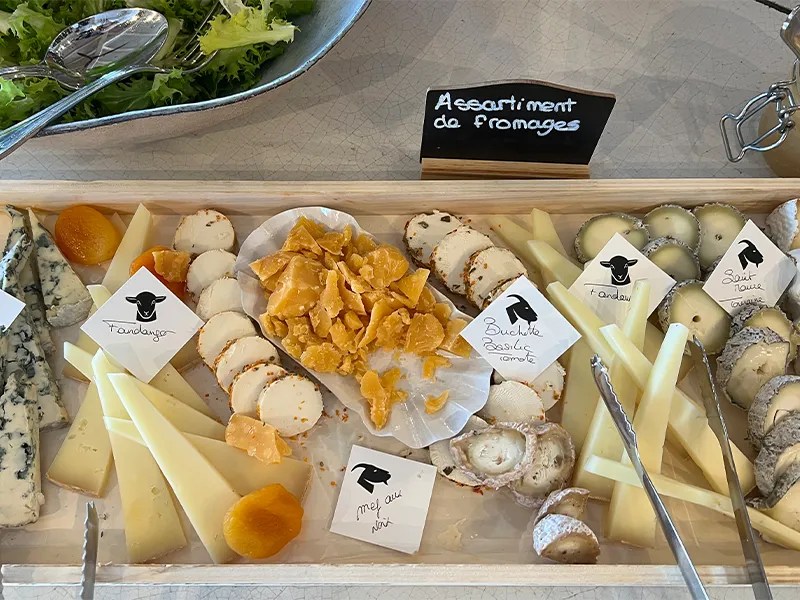
Crown your epicurean journey by indulging in what is quite possibly the best brunch in France, or at least in the top three. At the hotel Crillon-le-Brave in Crillon-le-Brave, they really know how to spoil you. Brunch (Sundays) here is not cheap and nor should it be – you’ll be tempted by an enormous choice of lip-smacking dishes from oysters to mouth-watering cakes, while you enjoy exquisite views over the Provence landscape. Heavenly. And irresistible.
Discover the truffle route in Vaucluse: provenceguide.co.uk/truffleroute
Wintry wonderlands
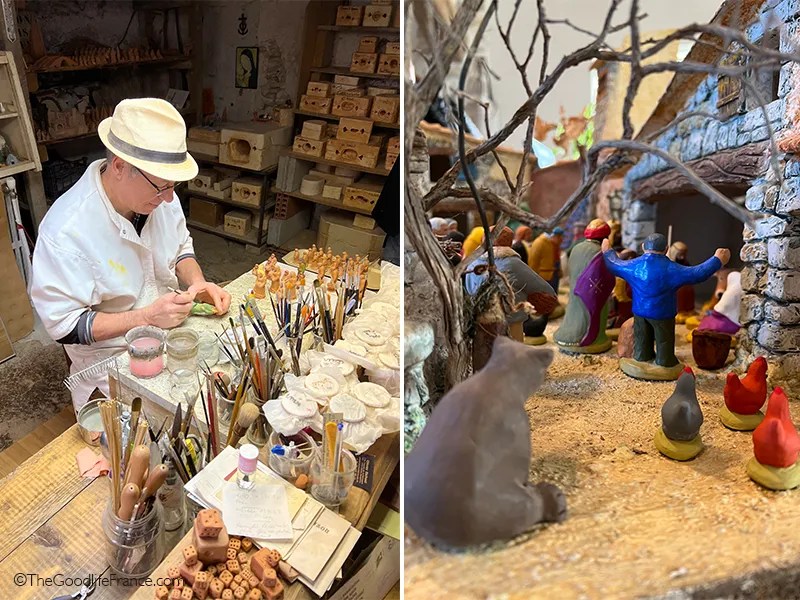
Vaucluse has 7 listed “Most Beautiful Villages in France” – Gordes, Roussillon, Ménerbes, Ansouis, Lourmarin, Venasque and Séguret – every one of them is worth a visit any time of the year, but in Winter, Seguret has a special place in my heart thanks to its incredible Santon display and a living nativity scene every Christmas Eve which gives the village the nickname ‘Bethlehem of Provence’. It’s also where you’ll find the workshop of santon-maker Denis Voeux – an absolute must-visit.
Santons means little saints, but these days the little figurines are just as likely to be celebrities or famous figures. In Provence, the cultural history of Santons goes back to St Francis of Assisi who in 1213 created the first living nativity scene. Over time this custom evolved into nativity crèches with large figurines, sometimes based on real people, apparently King Louis XIV had several scale models of himself included in the Versailles crib.
When anything to do with religion was banned during the French Revolution, people started making santons in secret at home.
In a workshop reminiscent of Cézanne’s studio in Aix-en-Provence (see page 62), Denis Voeux creates santons based on real people. He learned his craft from famous santonnier Robert Canut by watching him work and then practicing alone for years. He made his first santon in honour of his first child some three decades ago, and he made it in the likeness of his then 101-year-old grandfather, “he placed the first clay in his own mould, it meant so much to me” says Denis. Visit Seguret and you’re likely to recognise some of the locals who feature in his santon world. “People from around here don’t travel far, but their characters travel all around the world” he laughs. “My job as a santonnier is to bring the figure to life. The santon has a soul.” Every one of his handmade, hand-painted santons is unique.
You can find out more, book a visit or buy a santon at: www.les3souquets.fr
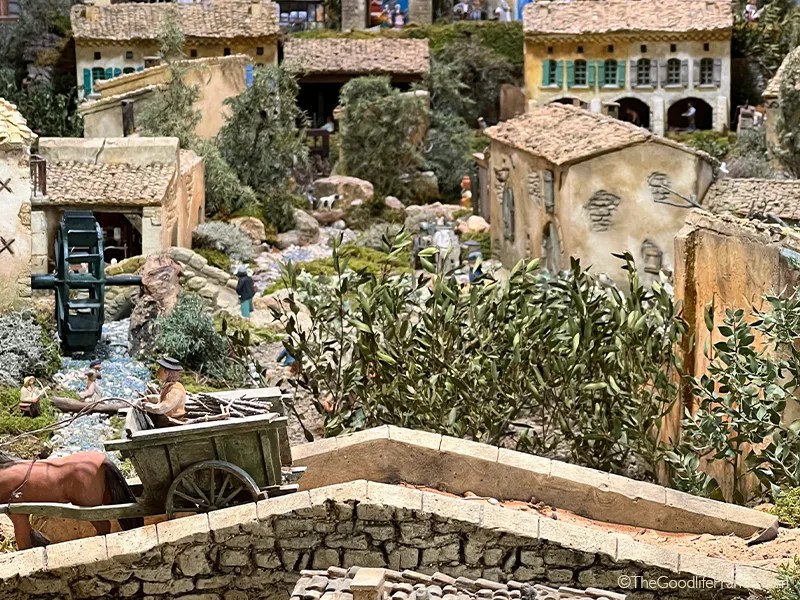
And if you love santons, then you really need to pop Carpentras on your must-visit list. In the tourist office is an immense crib, a whole world of santons, which every year has a new theme. With its fabulous market, historic streets, museums, and fun street performances from mid-December to early January (Noël Insolites), Carpentras is as uplifting as it is interesting. Noelinsoltes.fr
Vaison-la-Romaine in winter

For a lovely light display, it’s hard to think of anywhere prettier than Vaison-la-Romaine, around 10km from Seguret. Head to the upper town at dusk to see the lights twinkle over the tranquil cobblestone streets and then wander down to the main town via the Roman bridge and head to Patisserie/chocolaterie Gilles Peyrerol for a hot chocolate and a hedonistic foot-long croissant filled with caramel and chocolate.
L’Isle-sur-la-Sorgue in Winter
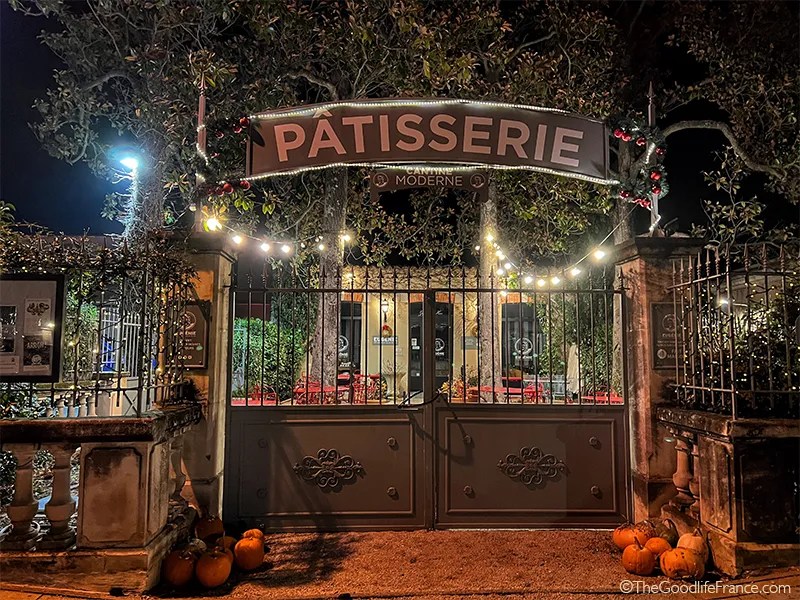
L’Isle-sur-la-Sorgue makes for a fabulous winter visit. There are literally hundreds of antique shops to browse in this pretty, historic town, plus superb restaurants. The late great British TV personality, chef and ‘gastronaut’ Keith Floyd had a restaurant here in the 70’s, lured by the charm of the town and the magnificent local produce – and wine. I couldn’t resist taking a morning workshop to make my own glass bauble at L’As du Verre with glassmaker Guillaume Roux, whose shop is brimming with gorgeous glass things! And at Filaventure, the family-run Brun de Vian Tiran wool mill of which has been in the town for more than 200 years, you’ll find the most divine rugs, shawls, scarves, throws and all things woollen: www.lafilaventure.com
And for more fabulous shopping, culture and fabulous food, head to Avignon, the capital of Vaucluse which has a fabulous market and some superb stores including Le Nid, for all things made-in-France for the home, fabulous crafts at Les artisans de la rue des Fourbisseurs, and treats from Chocolaterie artisanale Aline Géhant. And while you’re in this ancient city with its monumental 14th century Palace of the Popes, don’t miss the chance to treat yourself to a meal at the captivating and cosy Le Violette.
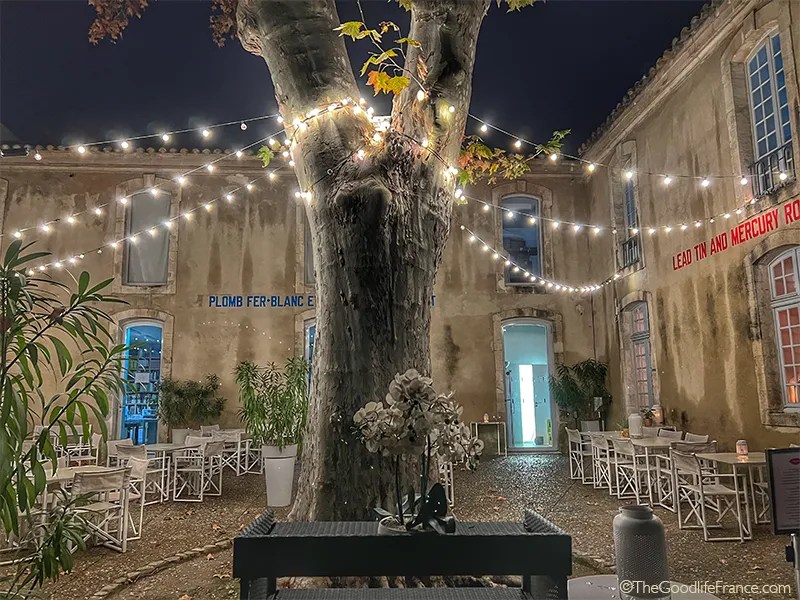
Enjoy the off-season charm of Vaucluse and end or start the year in Provencal style with a sprinkle of sparkle.
Discover heaps to see and do, places to stay, restaurants and lots more at provenceguide.co.uk
The Winter climate in Vaucluse
Winter officially starts around December 21, the date of the Winter Solstice in the western hemisphere and lasts until Spring, usually around March 21. The season is generally mild, but the winds can be very chilly, ferocious even, on days when the Mistral blows – but the good thing is, this huffy-puffy wind whips the clouds from the sky allowing the sun to shine through. Snow is rare (not more than 3 days a year) and usually over quite rapidly – except at the top of the majestic Mont Ventoux Mountain.
Is everything open in winter in Vaucluse?
Generally, you’ll find that things are open as usual. Villages follow their regular routines with markets and shops open, but some villages may have fewer weekly markets than in summer. Museums and some restaurants may have reduced opening times, so check in advance. Most vineyards are open for wine tastings and tours as always. There’s plenty going on from Christmas markets to festivals, including concerts at Lourmarin Castle, and the major Equestrian festival, Cheval Passion, and dance festival Les Hivernales, in Avignon.
Accommodation is always available, smaller places may close in Winter but there are some fabulous hotels that are far cheaper this time of the year, the perfect excuse to push the boat out.
Janine Marsh is the author of several internationally best-selling books about France. Her latest book How to be French – a celebration of the French lifestyle and art de vivre, is out now – a look at the French way of life. Find all books on her website janinemarsh.com
Want more France?
Discover more fabulous destinations in France with our free magazine The Good Life France
Love France? Have a listen to our podcast – everything you want to know about France and more!
All rights reserved. This article may not be published, broadcast, rewritten (including translated) or redistributed without written permission.


