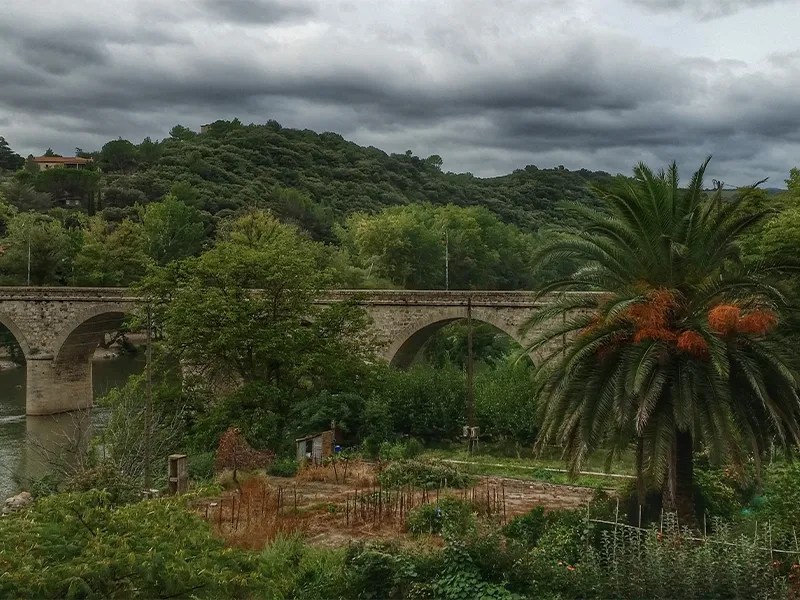
Languedoc is France’s new hotspot for cyclists says Anna Richards as she pedals her way through epic scenery and picturesque villages.
I was a cyclist long before moving to France, finding it fully acceptable to turn up to work, social events and everything in between caked in a mixture of sweat, mud and bike grease. Cycling in France is something else though, it’s in the soul of the country. After epic bike trips along the Rhône, mountain biking in the Alps and routes flatter than crêpes on islands off the Atlantic Coast, I may just have discovered the best part of them all in France for cycling. Languedoc.
The variety is spectacular. Cycle tracks around red rock lakes that look as though they should be in outer space. Craggy limestone pillars. Salt flats home to native Camargue bulls.
I’ve ridden a rickety bike far too big for me along the narrow string of land between the Mediterranean Sea and the saltwater lagoon, the Étang de Thau, wobbling perilously next to the water. I’ve bumbled over the cobbled streets of villages lost in time, and felt the exhilarating rush of a downhill sprint from the hills of Haut-Languedoc to the vineyards spread out like a calm ocean of vines below me. This time I had three different routes to test — on three very different bikes.

First up, I was on a flamingo hunt. The bike was a butt-buster, desperately in need of oil, but my route was flat, making for plain pedalling. I started from Château Capitoul, but you could equally extend the route by 10 km and set off from Narbonne, where Roman vestiges hide between bistros and shoe shops. Down from Capitoul, long grass quickly gives way to water as deep and rich-looking as a sapphire. A cycle trail skirts around the étang to reach Gruissan town, the Barberousse Tower cherry-like above the rooftops. The flamingos were there, toothpick-like legs, milky pink, immobile, like cardboard cut-outs against the shore.
A further 3 km along a cycle path so straight that if the literal evidence of Romans in Narbonne didn’t have me thinking about the Roman Empire, this route certainly did, and I arrived at Gruissan Plage, 2 km of sand.
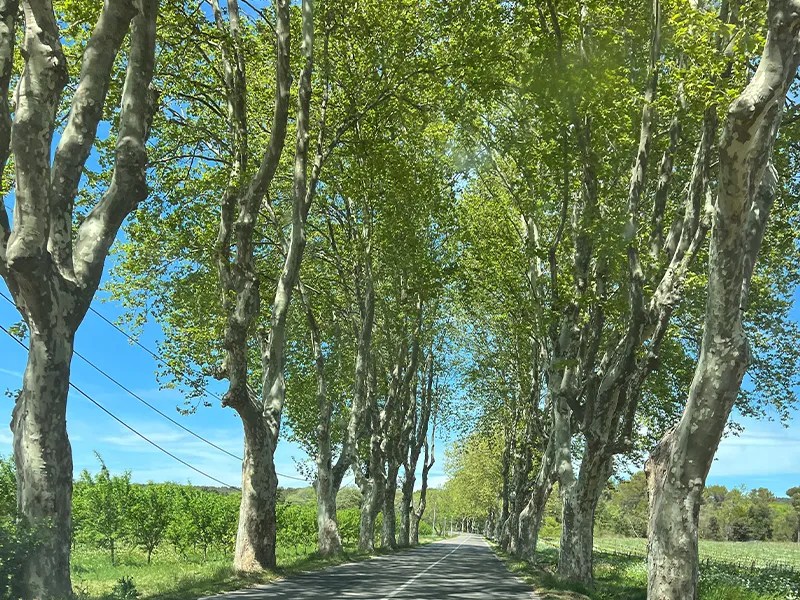
There’s a very famous photo of a man and his son, bike laden with baguettes, riding down an avenue of plane trees (Boy, Bicycle and Baguette). It was a French tourism campaign in 1955, and the photo encapsulates France’s cycling culture, even though it was staged. It was taken by the famous photographer, Elliott Erwitt, but it could have easily been taken on my second route, where I was on a quest to find Molière and mussels. From Château St Pierre de Serjac (because this cyclist loves a luxury sleep), I made for Pézenas, on market day, the historic capital of the region. This time I was on a road bike, flying down the gently undulating roads flanked on either side with plane trees.

Molière lived in Pézenas for a spell, and it’s allegedly where his famous play Le Médecin Volant was first performed in 1655. The theatres, bookshops and literary themed cafés pay homage to the town’s famous alumni, but since Molière is old news — almost 400 years old — I was more interested in the town’s 17th century architecture, and the spectacular Saturday market. A further 16 km took me to the Étang de Thau, where you can eat swollen oysters for a pittance at Le St Barth Tarbouriech, an oyster farm on the water which supplies Michelin-starred restaurants. To put fuel in my legs, I tucked into the mussels and a tielle Sètoise (a pie filled with octopus ragu) too.
A final bike ride was on the cards, 80 km long, on a brand-new loop which opened this February, marketed as the Oenovélo. Needing to bash it out in half a day, I opted for an e-bike. After 700 m of elevation gain, I felt it was a wise decision.
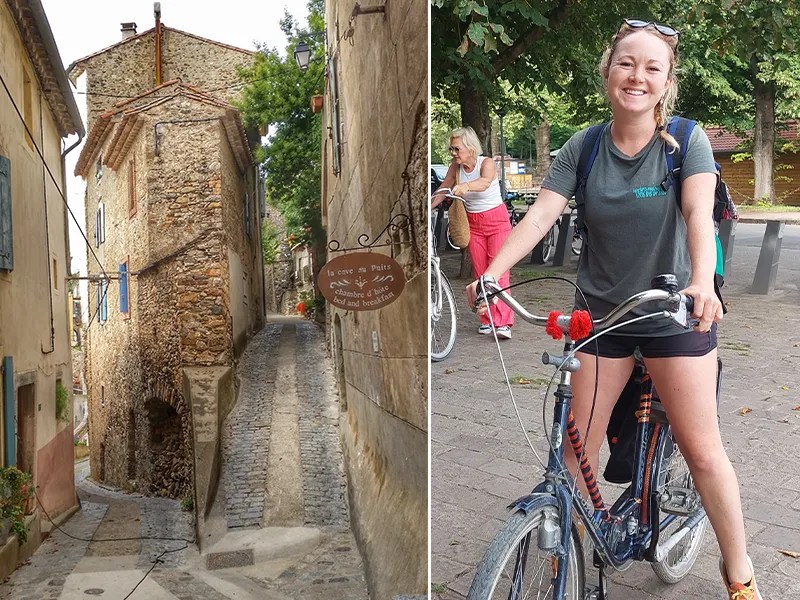
The tourism board recommends splitting this route over two to three days, to get the maximum ‘oeno’ with your ‘vélo’, and it seems wise, particularly with wineries like La Cave de St Chinian and Le Domaine de Soustres for tastings. Château les Carrasses is virtually on the cycle trail, making a great stop, and they’ve got all the bike repair facilities and know-hows for weary cyclists. Flowers framed the vines, and for a good two thirds of the route, I cycled right alongside vineyards. Much of the route follows an old railway line, and former station houses inject keeps of character. The most scenic stretch was along the Canal du Midi, running from just before 18 km almost unbroken to Capestang. Weeping willows hang over barges on water the colour of algae, and in Capestang the sun-drenched main square makes for a perfect refuel point for tapas and a beer. Signage is a little intermittent, download the GPX trace (visugpx.com) on a good navigation app.
There are 4,000 km of cycling routes in Hérault, and they’re accessible to everyone — none of these 2,000 m + climbs to mountain passes that serve as the ultimate challenges during the Tour de France. Be it Roman-straight roads to ruins of the same era, or an excuse to work up a thirst for a wine tasting, if holidays on two wheels are your thing, head to Languedoc.
Anna Richards is a writer & guidebook author living in Lyon. Her work has appeared in Lonely Planet, National Geographic and many more.
Want more France?
Discover more fabulous destinations in France with our free magazine The Good Life France
Love France? Have a listen to our podcast – everything you want to know about France and more!
All rights reserved. This article may not be published, broadcast, rewritten (including translated) or redistributed without written permission.


