Discover what makes a village officially one of the most beautiful in France…
In March 1982 in the heart of the Nouvelle-Aquitaine region, the mayor of a red sandstone village in the department of Corrèze came up with an innovative idea that he felt could help stem the rural exodus, not just from the beautiful but sleepy countryside around his home, but perhaps even across France. Charles Ceyrac’s scheme had the potential to inject new life into historic villages that were packed with history and heritage, but struggling economically as people left to live in bigger towns.
Today, more than 40 years on, the association of Plus Beaux Villages de France (PBVs) numbers 180 rural gems and has not only spread across 14 regions of France and 70 departments, but also inspired similar schemes from Quebec to Wallonia, Switzerland to Japan. The department of Aveyron currently boasts the most designated PBVs with 11, followed by Dordogne with 10.
To become a member, candidates must satisfy some 30 criteria that include architectural heritage, protected natural surroundings, and harmonious rural development. In return for maintaining standards, the chosen villages have welcomed new craft businesses and restaurants, enjoyed increased tourism, and, equally important, seen an upturn in their dwindling populations.
With a maximum of 2000 inhabitants, each PBV is individual in its architecture, history, and location, but when you visit a village with the official classification, you know you are in for a treat. The essence of every village is so much more than just bricks and mortar, stones and timber. An animated community that works together to keep local traditions and heritage alive in the 21st century.
Here are a few of my favourites that give a flavour of the diversity and importance of these beautiful villages and their thriving communities. To find out more, visit plusbeauxvillagesdefrance.org, which includes ideas for seasonal itineraries, romantic stays, and various themed holidays. Then plan your next touring holiday with the help of the Michelin touring map and the official guidebook. The latest edition in English, published by Flammarion, goes on sale in February.
Collonges-la-Rouge, Corrèze
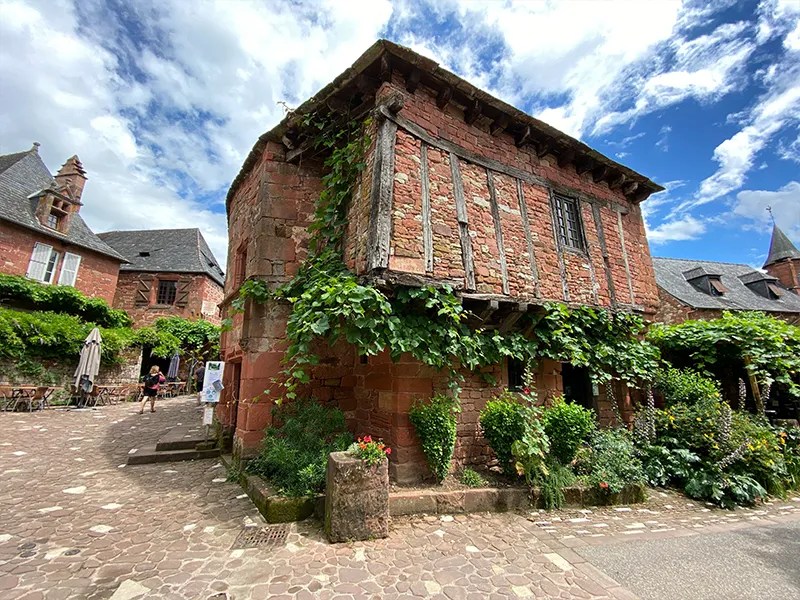
On the borders of Limousin and Quercy, Collonges-la-Rouge is where the idea for the Plus Beaux Village movement began, thanks to Mayor Charles Ceyrac. Built around an 8th century Benedictine prior, Collonges is a village that is impossible to forget with its grand properties of rich red sandstone, many adorned with towers, turrets and watchtowers. In the centre of the historic streets, the 16th century grain and wine market is testament to the trade that brought prosperity to this once fortified village. Today it is an enchanting spot to browse independent boutiques selling local produce and craft items, and soak up the atmosphere from a café terrace. vallee-dordogne.com
Le Bec Hellouin, Eure
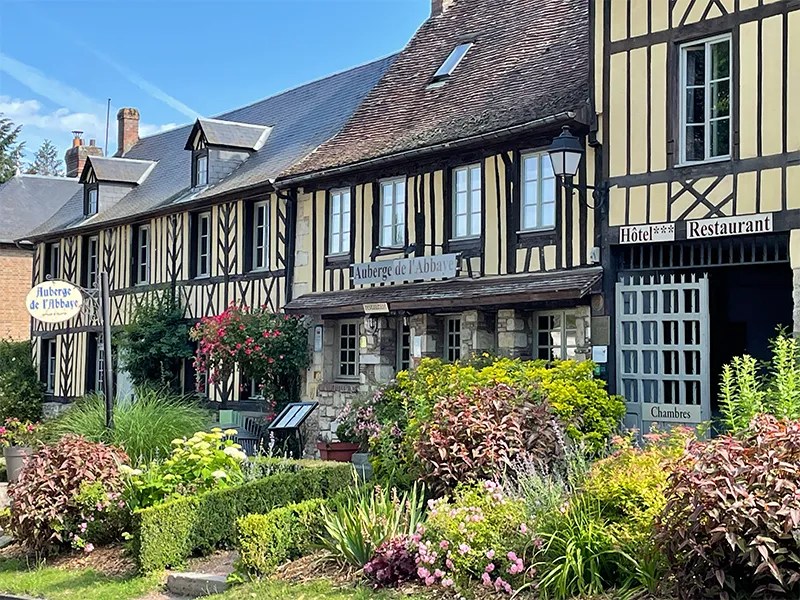
Half-timbered houses in a different style grace the main street of Le Bec Hellouin, situated between Rouen and Lisieux in Normandy. The name comes from the abbey founded beside the Bec stream in 1034 and its first abbot, Hellouin. Throughout the 11th and 12th centuries, the community of monks was closely linked to the English church with abbots going on to become Archbishops of Canterbury, Bishops of Rochester, and abbots at many important English abbeys. Only the tower remains today from the medieval complex, but a new community of Benedictines have lived here since 1948, their home overlooking an idyllic village centre where half-timbered houses stand behind flowerbeds and grass banks.
Lavaudieu, Haute-Loire
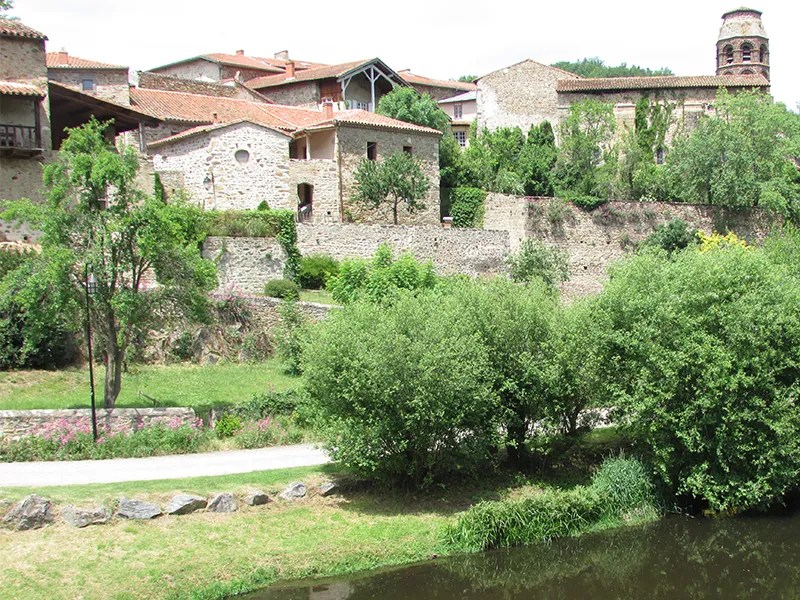
How can you not fall in love with a village with a name that translates as ‘God’s Valley’? The village of Lavaudieu – ‘La Vallée de Dieu’ – grew up around an abbey founded by Benedictine monks in 1057 on high ground above the Senouire river. The only monastery in the Auvergne with a Romanesque cloister, the abbey complex also boasts a 12th century mural running along the wall of the refectory. Visit the adjacent church opening onto the village square and the museum of local crafts and country life in the 19th century bakery. And maybe follow one of the marked trails to explore this tranquil valley for yourself.
Vogüé, Ardèche
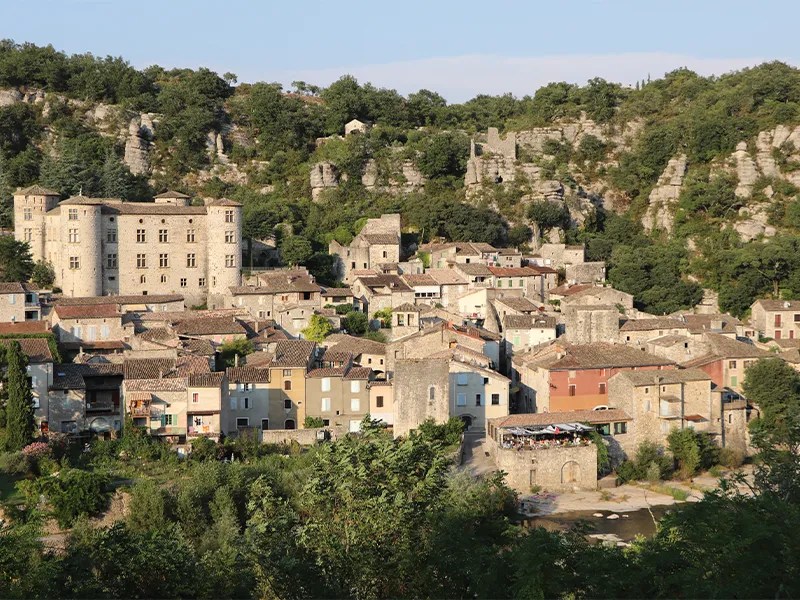
Nestled in an amphitheatre beneath a cliff, Vogüé has everything you might expect in a medieval village. An idyllic location on a bend in the Ardèche river; narrow streets of medieval houses topped with curved tiles; and tiers of flower-bedecked terraces. Taking its name from one of the area’s most important families, the village is dominated by a castle, rebuilt in the 16th and 17th centuries with mullioned windows and a tower at each corner. Run by Vivante Ardèche, it is now home to a museum of art and local history. Take the marked trail to Saint Cerice Chapel for panoramic views or maybe hire a canoe for a family-friendly excursion at water level. en.gorges-ardeche-pontdarc.fr
La Bastide Clairance, Pyrénées-Atlantique
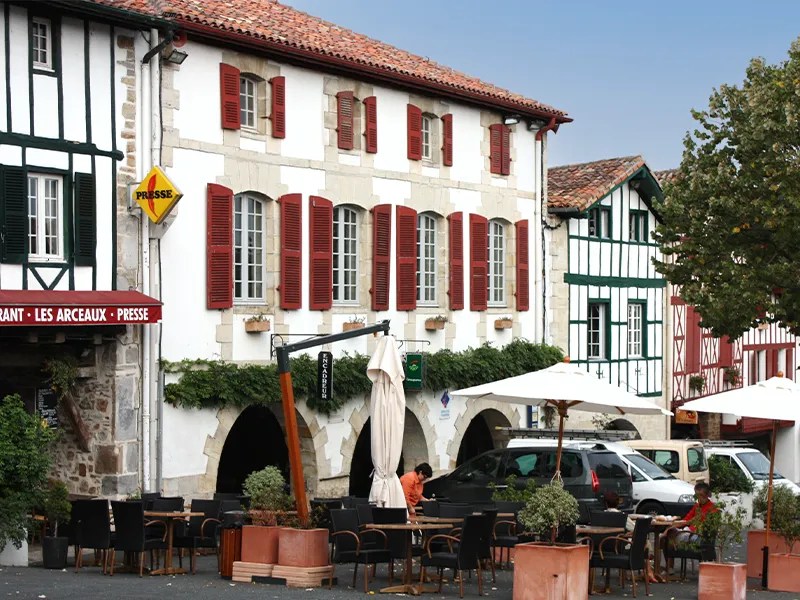
The architecture and building materials of France’s Most Beautiful Villages vary dramatically across the country. In the far south-west, La Bastide Clairance is typical of French Basque Country. Wooden beams in red and green stand out against white facades in this medieval river port on the Joyeuse river, founded in 1312 and built around the central Place des Arceaux in typical bastide style. A safe refuge in the 17th and 18th centuries for Jewish refugees fleeing the Spanish and Portuguese inquisitions, today La Bastide Clairance is home to a thriving community of artists and craftspeople.
Oingt, Rhône

Originally a Roman camp established on a ridge above roads that linked Saône and Loire, Oingt was expanded into a fortified village in the 10th century, growing in importance throughout the Middle Ages. Today its golden limestone houses are a highlight of the Beaujolais vineyards, just 30 minutes by car from Lyon. The historic streets are dotted with the studios of artists and craftsmen working in a range of materials from ceramics to textiles, jewellery to watercolours. Take in the panoramic views from the roof terrace of the 12th century tower; visit the Museum of Mechanical Music; and admire the 12th century polychrome sculptures in Saint-Matthieu church. destination-beaujolais.com
Auvillar, Tarn-et-Garonne
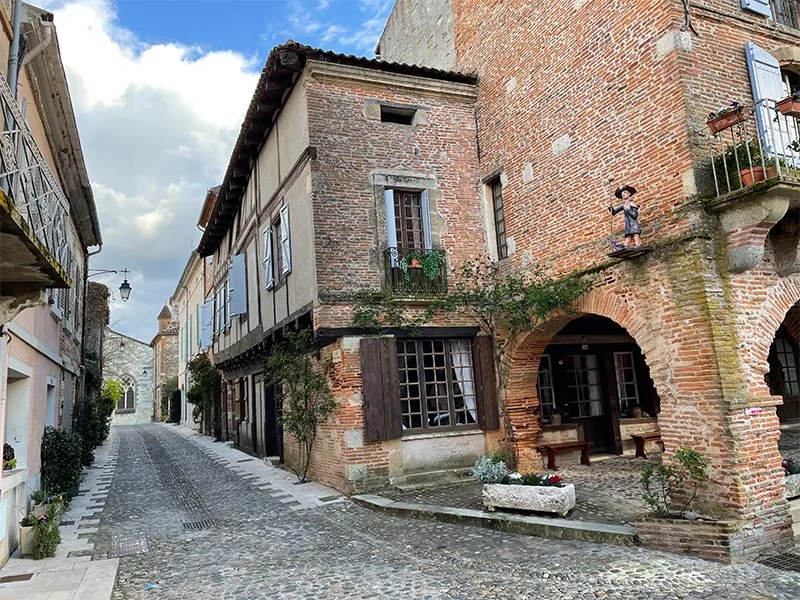
Location, location, location … usually the three most important reasons why any village became prosperous in centuries gone by. Stand on the former castle square at Auvillar and it is easy to see why geography brought wealth to this gem of the Garonne valley. The river passes beneath the rocky outcrop, giving local residents the power to demand tolls and grow as a trading centre serving the surrounding area. The medieval square is triangular in-shape and surrounded by half-timbered red-brick mansions, but at its centre stands a circular covered marketplace with Tuscan columns, built in 1824 and unique in the southwest. tourisme-tarnetgaronne.fr
Saint-Cirq Lapopie, Lot

Perched on a sheer cliff 100 metres above the meanders of the Lot, Saint-Cirq is dedicated to Saint-Cyr, the youngest Christian martyr. Its medieval streets are lined with bourgeois properties from the 13th to 15th centuries, 13 of them classified as Historical Monuments and, at the top of the steep main street stand the ruins of the castles belonging to three families who shared the village in the Middle Ages. A favourite haunt for artists including Surrealist painter André Breton, the cobbled streets are still dotted with artists’ studios. By day, the village restaurants buzz with visitors but few people live permanently in the centre. Stay over and early in the morning, the village is yours. Magic! cahorsvalleedulot.com/en
By Gillian Thornton, one of the UK’s leading travel writers and a regular writer for The Good Life France Magazine and website.
Want more France?
Discover more fabulous destinations in France with our free magazine The Good Life France
Love France? Have a listen to our podcast – everything you want to know about France and more!
All rights reserved. This article may not be published, broadcast, rewritten (including translated) or redistributed without written permission


