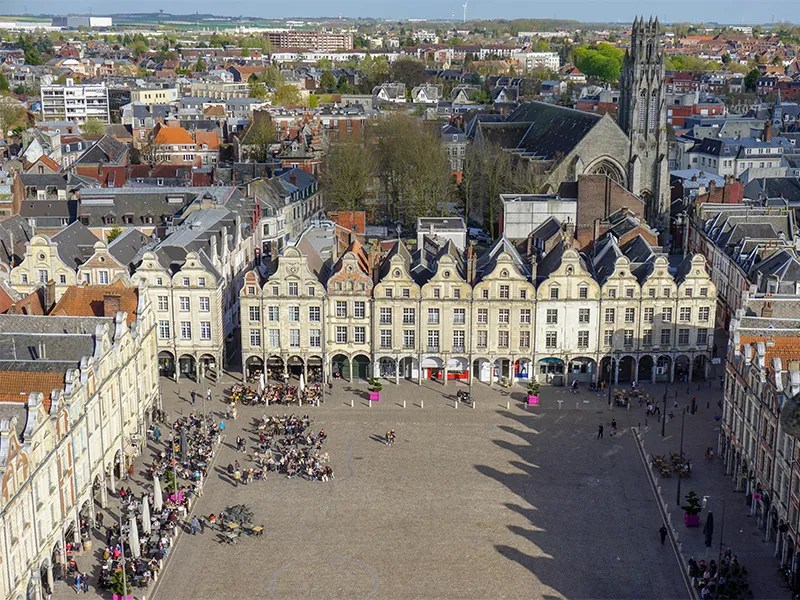
Arras in the Pays d’Artois region of Hauts-de-France is easy to reach from Calais, Paris or Lille by train or car, and makes for a fabulous city break. With a rich history, dazzling architecture and major remembrance sites – this foodie-pleasing city really does have something to delight everyone.
Cultural highlights
Iron Age man lived in Arras, the Romans called it Nemetocenna, in the middle ages it was famous for its textiles – fought over through the centuries, ruled by the Spanish and the Burgundians before finally becoming, and staying, French in 1640. In the 20th century Arras was almost destroyed by War. This city has a long, rich and tumultuous history.
Arras today is a hub of culture and heritage, a multi-layered city, quite literally. Small enough to walk almost everywhere, teeming with superb restaurants, a twice-weekly market and plenty of shops alongside historic sites. Leave the car behind and take a stroll.
Start your journey on the cobbled Place des Héros (named in honour of members of the Second World War resistance movement), one of the two neighbouring squares which are unique in Europe, lined with medieval-style columned arcades and 155 houses in sumptuous baroque Flemish fashion. Time travel through a free Timescope virtual-reality station (there are several dotted around and about the town), a panoramic looking glass which will you sweep you back to 1518 to take in the sights and sounds of medieval Arras when the town’s lofty belfry was being built. The 75m high UNESCO-listed belfry, which took almost 100 years to complete, was voted France’s favourite monument in 2015. Take a lift and climb the last few stairs to perch on the viewing platform and take in superb views over the town.

Below is the town hall. Destroyed during World War I, it was rebuilt with a spectacular Flamboyant Gothic façade, while the interior features exquisite art deco rooms. The tourist office is based here, watched over by several giants, UNESCO-listed larger-than-life effigies. Made from willow and papier-mâché these party loving, several-metres-high puppets, stars of festivals and carnivals, are the pride and joy of northern France.
Underneath the town hall, and accessible from the tourist office you’ll find Les Boves, a labyrinth of underground galleries first dug out in the 9th Century. These former chalk quarries were once used for religious services before becoming storage space for wealthy merchants, and then barracks for soldiers during World War 1, a permanent exhibition tells the story.
Behind the town hall is the Saint-Vaast Abbey and Museum of Fine Arts (which is closed until 2030 while it is undergoing transformative works). And close by, a plaque marks the house where local boy Maximilien Robespierre, the “terror” of the French Revolution, lived from 1787-1798.
The Citadel of Arras
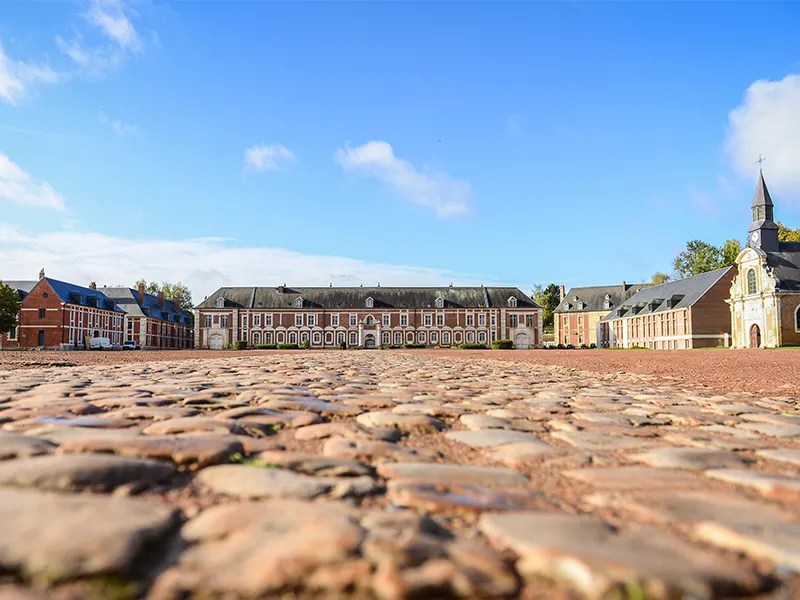
A short walk from the city centre, the UNESCO listed, 17th century Citadel of Arras was the first fortress created by Louis XIV’s legendary military engineer Vauban, at the same time a second fortress was built in nearby Lille. The wonderfully preserved fort, which functioned as a military base until 2010, is essentially a town within a town and has been given a new lease of life as a community hub with residential housing and businesses including a cheese refinery, treetop adventure centre and honey farm. It’s also where Main Square, the famous annual music festival, is held. Nicknamed the “belle inutile” as it was never besieged, the Citadel was used as a prison by the Germans during World War II and there is a moving memorial garden created by the local townspeople in honour of the 280 members of the local Resistance who were executed here.
Remembrance tourism – bringing history to life
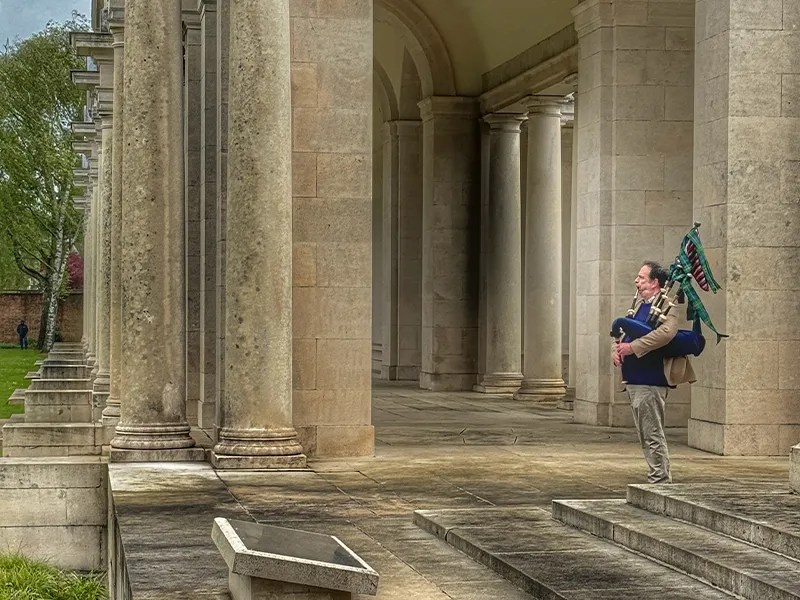
Next to the citadel is the Faubourg d’Amiens Cemetery, last resting place of more than 2,500 Commonwealth servicemen killed in World War I. When I visited, gardeners were tidying the cemetery, keeping it in pristine condition as always. They stopped work and stood stock still, as did I, when the haunting sounds of a lone piper carried on the air. The musician was Philip Astor who was visiting with his wife and played the bagpipes in honour of his grandfathers who fought in the. Great War. We all had tears in our eyes.
The gardeners were from the Commonwealth War Graves Commission in Beaurains, just 4km from the centre of Arras. Visit for a fascinating glimpse into the organisation’s painstaking work maintaining Commonwealth cemeteries, monuments and memorials around the world.
Forever marked by two world wars, there are many major remembrance sites in and around Arras including the Ring of Remembrance on which are inscribed the 579,606 names of every soldier who died in the region of Nord-Pas de Calais in the Great War, whatever their nationality or rank and regardless of what side they were on. Vimy Memorial is Canada’s largest overseas memorial. And Ablain-Saint-Nazaire French Military Cemetery, also known as Notre Dame de Lorette, the largest French military cemetery in the world.
Wellington Quarry, a 10-minute walk from the town, is a museum and memorial to those who fought in the battle of Arras. On April 9, 1917, 24,000 British Empire soldiers, billeted in a warren of underground tunnels, leapt forth in the most daring surprise attack of the Great War. It’s an emotional presentation, most people require tissues at the final stage.
Truly scrumptious

“We eat rats here” a local told me with great glee. And they do. But these rats are made of chocolate. The rat is the symbol of Arras – its pronunciation sounds just like ‘rat’, the same word in French as in English. You can buy the chocolates in Patisserie Thibaud or Patisserie Jean Trogneux (the business started by the great grandfather of Brigitte Macron, wife of the French President), famous for their chocolate and macarons.
This is a city where indulging is encouraged. Delicious regional dishes take centre stage and there’s an enormous choice of restaurants and bars and a thriving terrace scene on [pedestrianised) Place des Héros. Arras and beer go back a long way, the Saint-Vaast Abbey was one of the largest breweries in the Middle Ages. At l’Oeuf ou la Poule restaurant (don’t miss their signature chicken pie), a stone’s throw from the Belfry, you can pair local dishes with a great range of local beers.
On Wednesday mornings there’s a marvellous market on Place des Héros and on Saturday mornings a huge market with more than 200 stalls which spreads over three squares.
Gourmands will go gaga for the gastronomic delights of this city.
Find loads more to see and do in Arras and Pas-de-Calais at: www.visitpasdecalais.com
Janine Marsh is the author of several internationally best-selling books about France. Her latest book How to be French – a celebration of the French lifestyle and art de vivre, is out now – a look at the French way of life. Find all books on her website janinemarsh.com
Want more France?
Discover more fabulous destinations in France with our free magazine The Good Life France
Love France? Have a listen to our podcast – everything you want to know about France and more!
All rights reserved. This article may not be published, broadcast, rewritten (including translated) or redistributed without written permission.


