As the price of fuel escalates and rising hire car fees, more and more visitors to France are looking for a different way to travel and Janine Marsh explores the options for those who want to leave the car behind.
The state-owned rail network SNCF (Société Nationale des Chemins de Fer makes travel across France very easy. TGV (Train à Grande Vitesse/High Speed) trains operate across France and beyond, speeding you on your way at 300km/h across much of France. Local train services are provided by TER (Transport Express Regional) or Corail trains, which are slower than the TGV. In rural areas, train services may be sparse, and there may be little or no public transport, so a car is needed, but with planning, trains, buses (there are often bus services attached to train stations), trams and taxis/ubers will easily take you across France without a car is easy.
Top tips for train travel

Book in advance early to avoid disappointment (some peak travel routes are quickly filled) and for cheaper tickets. You can book direct through SNCF or affiliate companies (usually for a bit extra) but be aware that there are limitations on how far ahead you can book – 3-5 months is normal. SNCF operates INOUI a premium service network to more than 200 destinations in France, as well as to Europe, with more space, first-class carriages, restaurant car and other services; and OUIGO – their low-cost service, which has only second-class seats, can be a slower journey, and has a restricted luggage allowance (you can pay more for extra luggage needs), with prices from as low as €10 from Paris to Bordeaux and 50 destinations in France as well as to Brussels (from €13).
Download the SNCF Connect APP to your mobile phone to make life easier: you’ll get real time updates, including confirmations, train and platform details. Once my train was late for a connection and the APP automatically booked me on the next train avoiding the need to queue to update my ticket. You can also download your ticket onto your phone and use it to access the platform via the automatic barriers. If you have an SNCF-issued paper ticket, remember to ‘compost’ it before you board via the stamping machines to validate it (usually at the front of the platform.)
Be aware that there are generally less trains (and public transport) on Sundays and national holidays, especially in smaller towns – so check timetables in advance.
Discount train travel in France
For discount train travel in France – check out the Carte Avantages that are available not just to residents of France but to visitors. Generous discounts and perks are available. I have a card which costs €49 which gives me 30% off train travel and I’ve racked up thousands of kilometres a year visiting almost every department of France.
Now, I do have to mention the dreaded strikes, they happen but not as much as most people think. And delays do occur. But mostly French rail services are seriously efficient, and staff are almost always helpful.
Now you’ve left the car behind, there’s no sat-nav, no parking stress, you can enjoy that second glass of wine with lunch or dinner, and the scenery is part of the journey – so, where to go?
8 great car-free Cities in France
Avignon by train
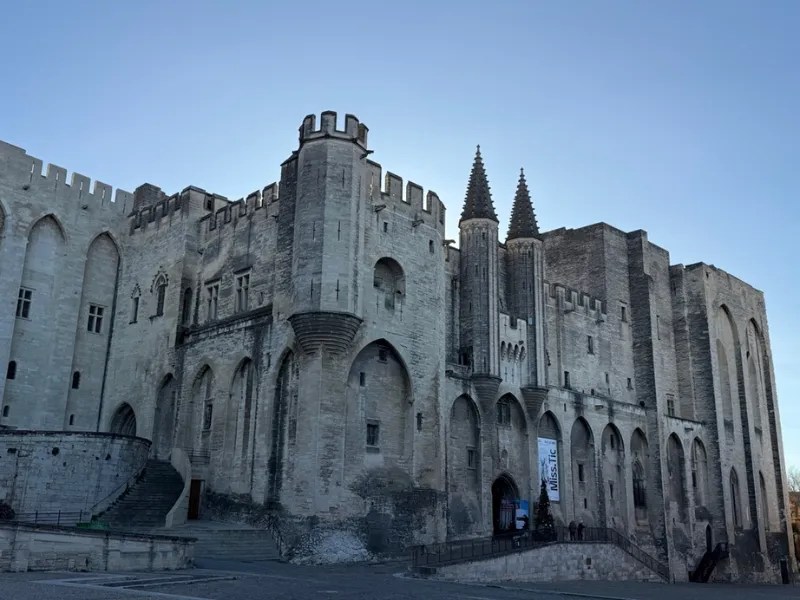
Avignon’s TGV station is 10 minutes’ drive out of town but there is a train connection to the local TER station in the centre and from there you’re just minutes on foot from the monumental Palais des Papes and the famous Pont d’Avignon. The city is compact, walkable, and full of Provençal charm.
From here, regional trains make day trips effortless: It’s just 25 minutes to L’Isle-sur-la-Sorgue, a dreamy town of canals and antique markets; Orange, home to a remarkably well-preserved Roman theatre is just 13 minutes by train; and Arles with its Roman remains and fabulous city Is just 16 minutes away. Train from Paris – from 2h 40m.
Nice by train

Nice is made for strolling—the Promenade des Anglais, the old town (Vieux Nice) with its famous Cours Saleya market, beaches and museums including (Matisse, Chagall), and that irresistible Riviera glow.
Public transport is excellent with train connections to Monaco (25 minutes), Antibes (16 minutes), Cannes (27 minutes) and over the border to Ventimiglia in Italy in less than an hour. You can pick up a Sud Azur Explore Pass which gives you unlimited travel for 3, 7 or 14 days on transport networks in the Alpes-Maritimes and Monaco, at a truly great price. Train from Paris from 5h 42m.
Montpellier by train

Montpellier is a joy without a car. Wander the cobbled streets of the old town, sip an aperitif in Place de la Comédie, explore the historic Écusson district with its colourful cobbled streets or hop on the sleek tram system which whisks you everywhere including the nearby beaches – purchase the Hérault special transport beach shuttle ticket for a few euros and the tram/shuttle to Grand Travers Plage.
Local trains will take you to Sète, famous for its canals and oysters, and just 14 minutes by local train, and Beziers is just 37 minutes away – you can even take a Spanish detour with Barcelona a mere 2h 55m (8 trains a day). Train from Paris – from 3h 14m.
Aix-en-Provence by train
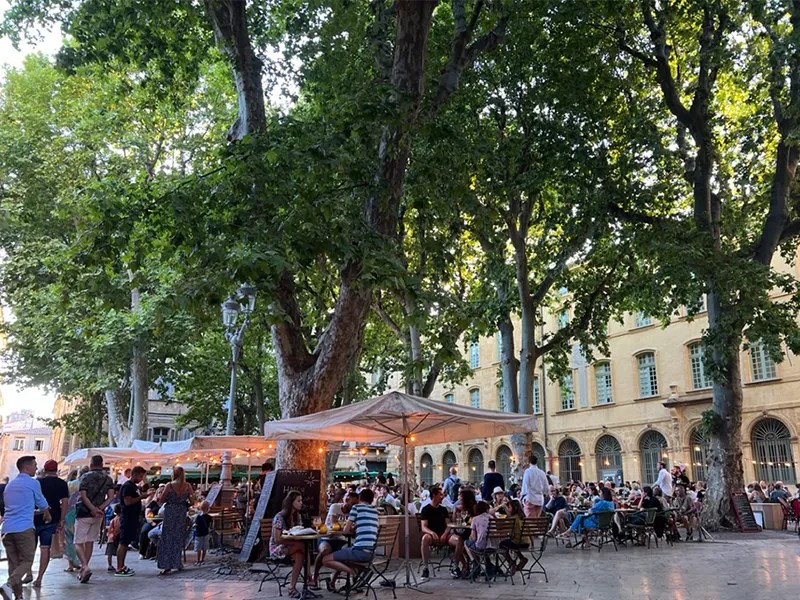
Aix-en-Provence TGV station is about a 20-minute drive out of town and taxis are expensive. But you can take a bus from right outside the station for just a couple of euros (you can pay onboard the bus). Aix is all golden stone, bubbling fountains, the legacy of Cezanne, bustling markets, and shady boulevards.
There are multiple connections from the TGV station including Nice, Cassis and Marseille (about 15 minutes, but that doesn’t include time to get to the station), and it’s much cheaper and quicker to reach Marseille by bus (30 minutes) from the city centre. Train from Paris – from 3h 2m.
Toulouse by train

With its terracotta glow and relaxed southern spirit, Toulouse is easy to discover on foot, metro, and tram. Highlights include multiple museums, a superb gastronomic scene and the extraordinary Halle de Machines where a giant Minotaur lives with more extraordinary ‘creatures.’
From here, Albi with its stunning cathedral and Toulouse-Lautrec museum is about an hour by train, and fairy-tale pretty Carcassonne is just 42 minutes away. Train from paris from 6h 15m.
Lille by train

Lille is perfect for culture vultures and foodies. With stunning Flemish façades, buzzing markets (Wazemmes on Sunday is fantastic), museums and art venues galore, plus the Grand Place and historic Vieille Bourse (an ornate building which was the former stock exchange which now hosts a second-hand book market, open air chess games and tango dancing in the summer), it’s easy to visit the centre on foot or by metro, tram and bus.
From here, Roubaix with its world class La Piscine museum in an Art Deco swimming pool, is just 9 minutes by train – a tad longer by tram or metro. You can be in London via Eurostar in around an hour and 20 minutes and cross the nearby border to visit Bruges (1h 40m) and Brussels in just 30 minutes. Train from 1h 5m from Paris
Reims by train

Kings were crowned in Reims, and champagne flows beneath your feet in ancient chalk cellars. Discover Notre-Dame de Reims Cathedral, Champagne houses and museums. It’s easy to visit on foot.
Hop on a train to Epernay (30 minutes), home of Moët et Chandon and the Avenue de Champagne. Historic Laon is around 45 minutes away by local train. Train from Paris from 41m.
Strasbourg by train

Strasbourg with its timber-framed houses, Petite France district, canals, Gothic cathedral, and unique French-German culture is very easy to visit on foot.
From here it’s just 30 minutes to historic Colmar by train, and just two hours to Dijon in Burgundy – another fabulous city to visit without a car. It’s just a few stops by tram from the city centre just over the border to Kehl in Germany, and you can travel further into Germany by train. Train from Paris from 1h 43m.
Taking the train is part of the journey, and a great way to travel in France.
Useful podcast episodes:
Where do the French go on holiday in France
Janine Marsh is an author and the Editor of The Good Life France.
Want more France?
Discover more fabulous destinations in France with our free magazine The Good Life France
Love France? Have a listen to our podcast – everything you want to know about France and more!
All rights reserved. This article may not be published, broadcast, rewritten (including translated) or redistributed without written permission.


